
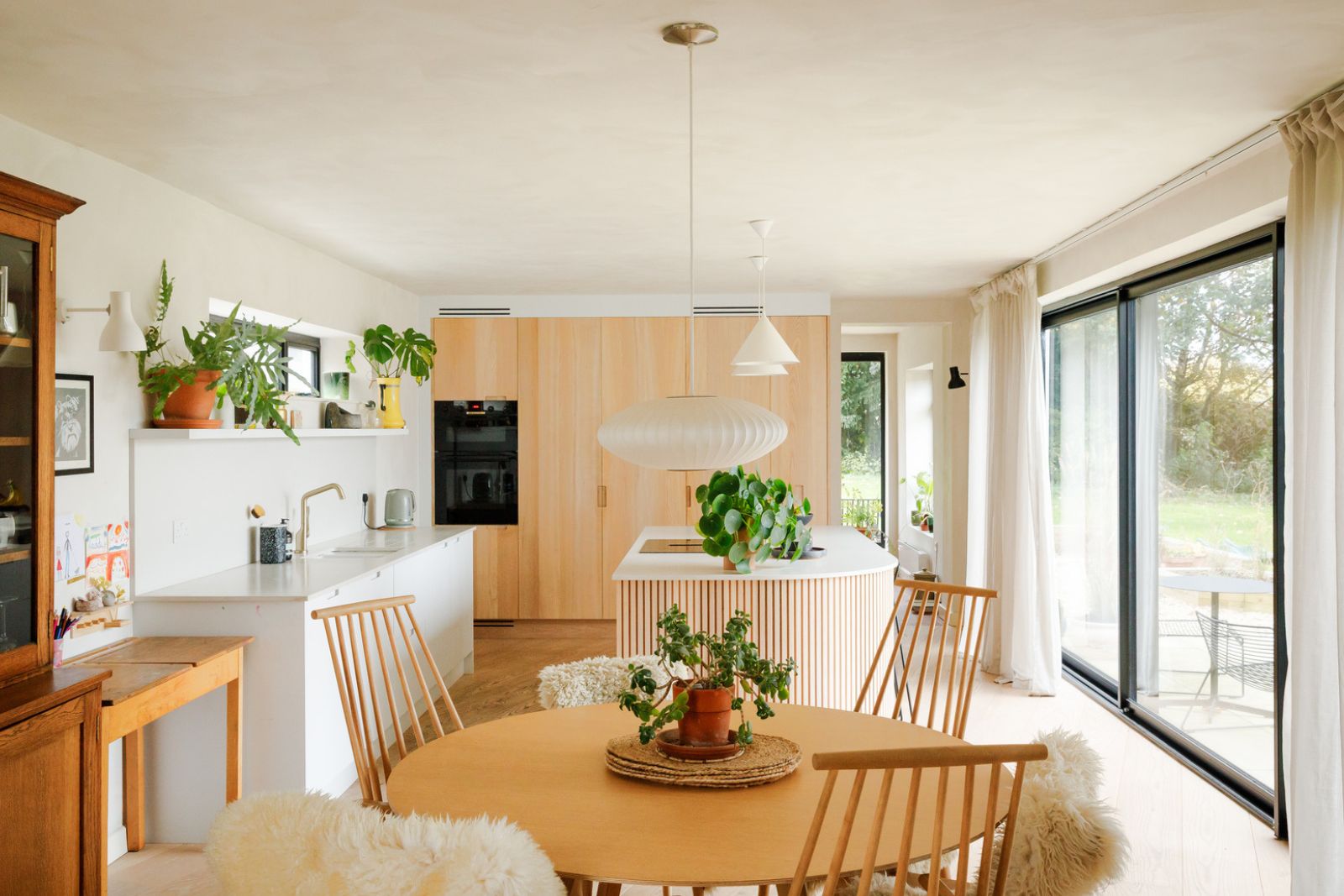
How good kitchen lighting transforms a space
Kitchen lighting plays a bigger role in our homes than we often realise. While we often spend ages agonising about finding distinctive lighting for living rooms and hallways, the kitchen can get overlooked. I spent lots of time researching the lighting for our own open plan kitchen dining room and I’m sharing some of those ideas in this post.
The kitchen is often the hub of the house and not just a space to cook. Choosing the right kitchen lighting can completely transform how the space feels and functions.
The best kitchens use a mix of kitchen lights to create both atmosphere and practicality. From kitchen island lighting to subtle under-cabinet lighting and soft wall lights, layering different types of kitchen lighting helps a kitchen feel warm, welcoming and easy to work in.
In Scandinavian homes, lighting is especially important. Long winter days and limited natural light mean that carefully chosen kitchen lights help create a cosy, calm environment while still providing the task lighting needed for cooking and everyday life.
In this post, we’ll explore how to choose the right kitchen lighting, how to layer different kitchen lights and the Scandinavian-inspired lighting ideas that can make a kitchen feel both beautiful and practical. If you are planning lighting throughout your home, you might also find my guide to Scandinavian lighting helpful.
What is kitchen lighting?
Kitchen lighting refers to the combination of lights used to illuminate a kitchen for both practical tasks and atmosphere. Good kitchen lighting usually includes a mix of overhead lights, task lighting for preparing food and softer lights that create warmth and ambience. The best kitchen lights work together to make the space bright enough for cooking and everyday tasks, while still feeling welcoming and comfortable.
The three types of kitchen lighting
Most well-designed kitchens use a layered approach to lighting. This typically includes three types of kitchen lighting that work together to create a space that is both practical and inviting.
- Ambient lighting – the overall light in the room, often from ceiling lights or spotlights
- Task lighting – focused lighting for preparing food, such as over a kitchen island or under cabinets
- Accent lighting – softer lighting that adds warmth and atmosphere
By combining these different types of kitchen lights, you can create a space that feels balanced, functional and comfortable throughout the day.
Kitchen island lighting
Pendant lights are one of the most popular choices for kitchen island lighting. They provide focused task lighting while also acting as a design feature in the room. Getting the spacing and height right is important so that the lights feel balanced and comfortable to work under.
As a general rule, the bottom of a pendant light should hang around 30 to 36 inches above the kitchen island countertop. This height allows enough light for food preparation while keeping the fixture at a comfortable level that doesn’t block sightlines across the kitchen.
If you’re installing multiple pendant lights, spacing them evenly helps create a clean and balanced look. A good guideline is to leave around 26 to 30 inches between each pendant. This prevents the lights from feeling crowded while still keeping the lighting focused over the island.
It’s also worth allowing about 12 inches from the edge of the island to the centre of the light fixture. This helps ensure the pendants sit neatly over the work surface rather than too close to the edge.
These measurements are simply guidelines, and the exact spacing can vary depending on the size of the island, the scale of the pendants, and the overall style of the kitchen.
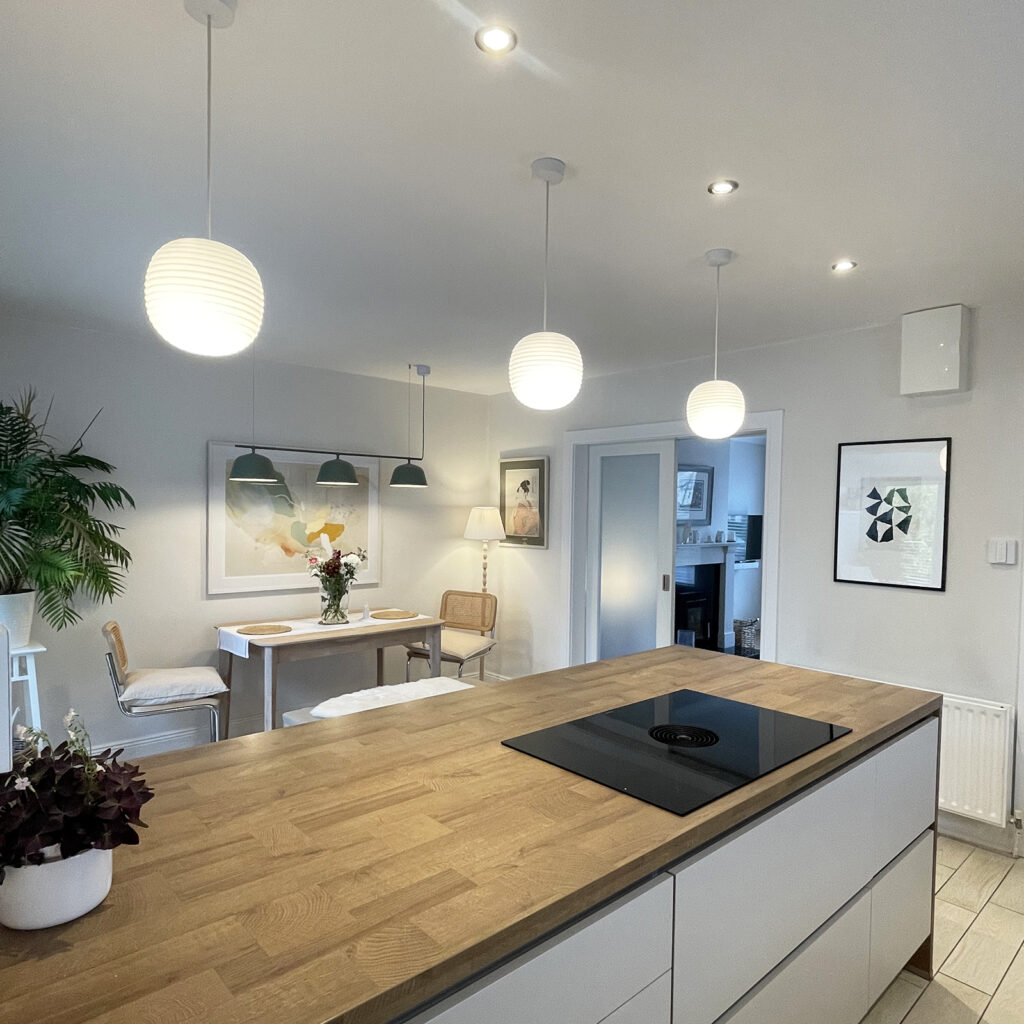
After considering different options for my own kitchen island, I went for three New Works lantern pendants because I loved the quiet simplicity of the design that looks like rice paper lanterns. I think the unfussy shape and the ribbed opal glass bring a little japandi minimalism to the kitchen area. They offer plenty of task lighting together with the ceiling spot lights and the kitchen window.
How many lights to hang over the kitchen island?
The number of pendant lights usually depends on the length of the island and the size of the fixtures. A good rule of thumb is to use two or three pendants spaced evenly across the island.
For small islands up to 1.8 m – two pendants often work best and for larger islands of over 2 m, three pendants create a balanced look. If you are opting for an oversized statement pendant or have a smaller space to work with – one pendant can work beautifully also.
The goal is to create even lighting without overcrowding the space.
For smaller kitchen islands or countertops, there are a huge range of shapes to choose from, including linear pendants which will help you maximise the lighting in your work space.
What size pendant light works best over the kitchen island?
Large kitchen islands often suit slightly oversized pendants, which create a strong design feature and help anchor the space visually. Smaller kitchens may benefit from slimmer pendants or glass lights, which provide task lighting without making the room feel heavy.
In Scandinavian kitchens, simple shapes such as dome pendants, glass pendants, or minimalist metal shades are particularly popular. However, there are no hard and fast design rules and a set of minimal pendant lights over an oversized kitchen island can look considered and modern in the context of the other lighting such natural daylight. We’ll look at some examples of Scandi style kitchen island pendant lighting below and why it works.
Minimal white Scandinavian pendant lighting for a kitchen island
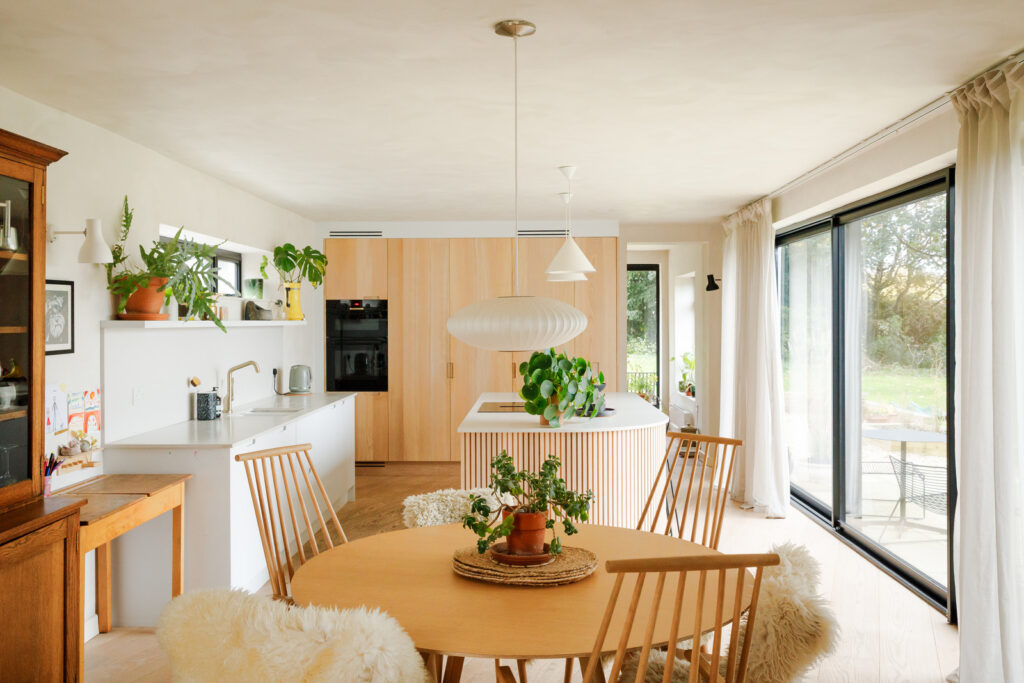
This kitchen is a wonderful example of using minimal white Scandinavian pendant lighting over the kitchen island. This beautiful, light-filled kitchen uses a soft white and natural wood palette to create a calm and inviting space. The combination of clean lines, warm timber and natural light is very typical of Scandinavian design, where simplicity and comfort go hand in hand.
Above the kitchen island, two simple white pendant lights provide focused kitchen island lighting while maintaining the airy feel of the room. Their understated design ensures they don’t overwhelm the space, allowing the materials and natural light to remain the focal point. These pendants closely resemble the classic Frandsen Benjamin pendant lights — a timeless choice for a Nordic-inspired kitchen — with their clean shape and soft, diffused light.
The kitchen lights have been carefully layered with a statement pendant over the dining area. The Nelson Saucer Bubble hanging light adds gentle texture and warmth, creating a soft glow that contrasts beautifully with the more functional lighting over the island. This combination of pendant styles is a great example of how kitchen lighting can be both practical and atmospheric.
Together, these lights create a balanced scheme that supports everyday tasks while also enhancing the overall mood of the space — something that is central to Scandinavian kitchen design.
Black pendant lighting over a kitchen island
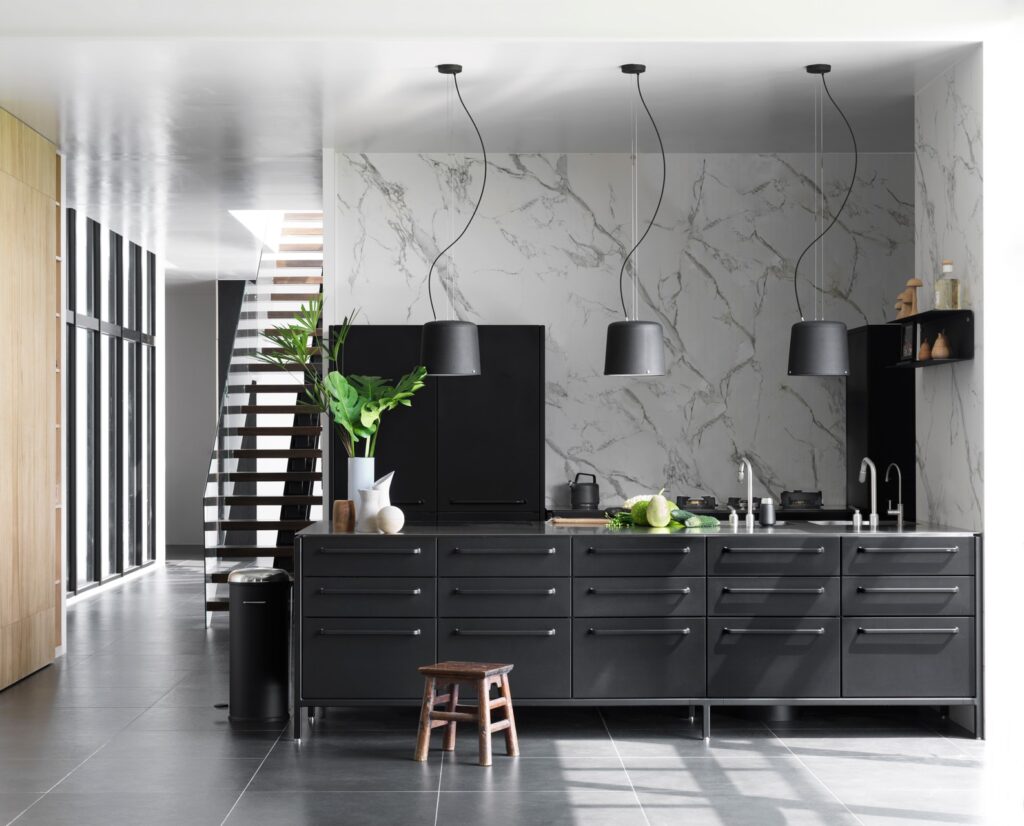
This ultra-modern kitchen uses a refined palette of black, marble and soft natural light to create a space that feels both sleek and considered. The clean lines of the cabinetry and the dramatic marble backdrop give the kitchen a strong architectural presence, while the natural light softens the overall look.
The choice of black pendant lighting over the kitchen island feels like a wonderful choice here. Suspended slightly lower, these kitchen pendant lights provide focused task lighting for food preparation while also creating a strong visual line across the length of the island. This lower placement helps to anchor the space, drawing the eye horizontally and emphasising the scale of the kitchen.
The proportions of the pendants work beautifully with the oversized island. Rather than competing with the bold materials, the simple cylindrical shapes keep the look minimal and controlled. This balance is key in modern kitchen lighting, where statement elements are often paired with clean, understated forms.
The dark finish of the kitchen lights enhances the depth of the space, picking up on the tones in the cabinetry and contrasting subtly with the veining in the marble. This contrast adds richness and definition, preventing the kitchen from feeling flat while maintaining its calm, cohesive look.
Bare bulb pendant lights over a kitchen island
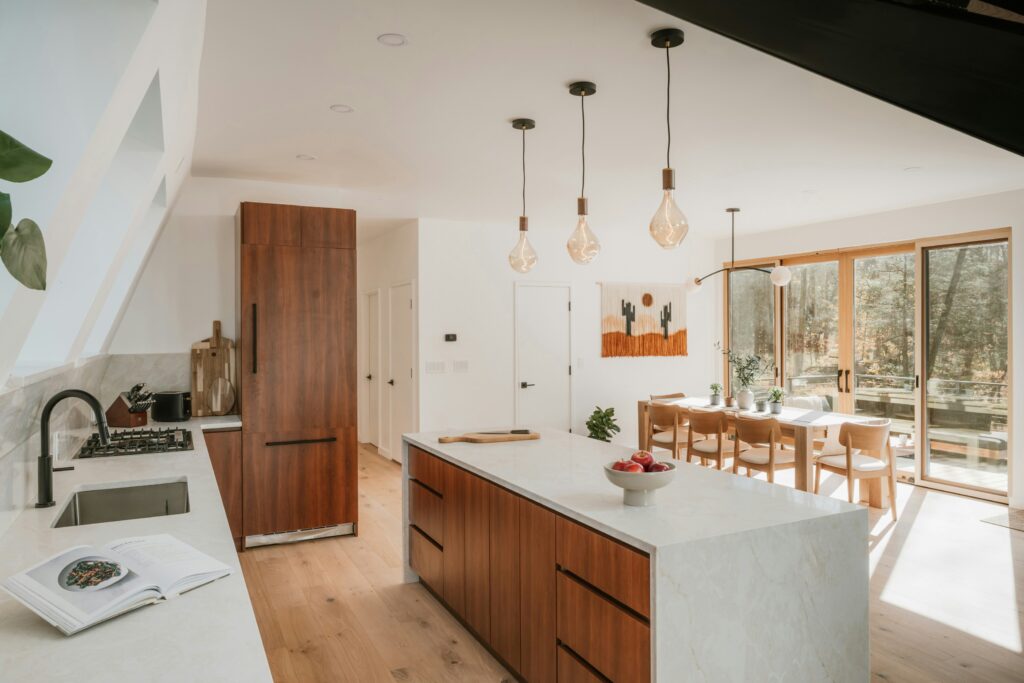
This open-plan kitchen and dining space feels warm, relaxed and beautifully connected to the outside. A warm palette of walnut cabinetry, pale marble worktops and light timber flooring creates a sense of balance, while the large glass doors flood the space with natural light and draw the outdoors in.
Over the kitchen island, a row of simple bare bulb pendants provides understated yet effective kitchen island lighting. The exposed filament bulbs bring a soft, ambient glow while keeping the overall look minimal and uncluttered. This style of kitchen pendant lighting works particularly well in spaces like this, where the materials and natural light are already doing much of the work. The simplicity of the fittings allows the eye to move freely through the space.
The spacing and alignment of the pendants also help to define the island as a central working zone within the open-plan layout. Even though the lights are minimal, they still create structure and rhythm across the length of the kitchen.
In contrast, the lighting over the dining table is more sculptural. The wall-mounted globe light adds softness and atmosphere, creating a gentle pool of light that feels more intimate and suited to dining. This layering of kitchen lights — practical, minimal pendants over the island paired with warmer, more decorative lighting in the dining area — is a great example of how kitchen lighting can be adapted to suit different zones within the same space.
Small kitchen lighting with skylights and spotlights
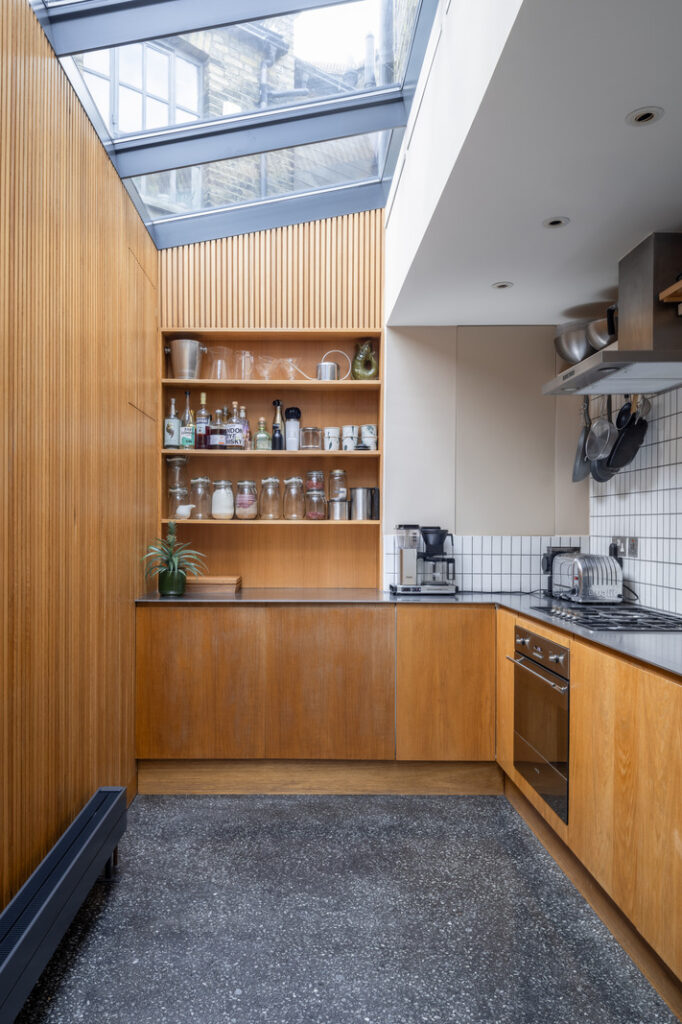
This compact kitchen is a beautiful example of how thoughtful design and natural light can completely transform a small space. Wrapped in warm wood cabinetry and vertical panelling, the kitchen feels both cosy and architectural, with the materials adding depth and texture without overwhelming the room.
The most striking feature is the introduction of large skylights above the kitchen area. These flood the space with natural daylight, drawing the eye upward and creating a sense of height and openness that makes the kitchen feel much larger than it is. The changing light throughout the day would also bring a softness and warmth that artificial lighting alone could never achieve.
Because of this abundance of natural light, the kitchen lighting itself has been kept intentionally minimal. Rather than using pendant lights, the space relies on discreet recessed spotlights positioned over the key work areas. These provide focused task lighting exactly where it’s needed — over the hob, sink and preparation surfaces — without interrupting the clean lines of the ceiling or competing with the skylights above.
This approach to kitchen lighting works particularly well in smaller kitchens, where visual clutter can quickly make a space feel crowded. The absence of hanging fixtures keeps the room feeling open and uncluttered, while the spotlights ensure the space remains practical and well-lit when natural light fades.
Overall, this kitchen shows how combining strong natural light with simple, well-placed kitchen lights can create a space that feels bright, functional and effortlessly calm — a key principle in Scandinavian-inspired design.
Linear kitchen lighting over an island: A clean alternative to pendant lights
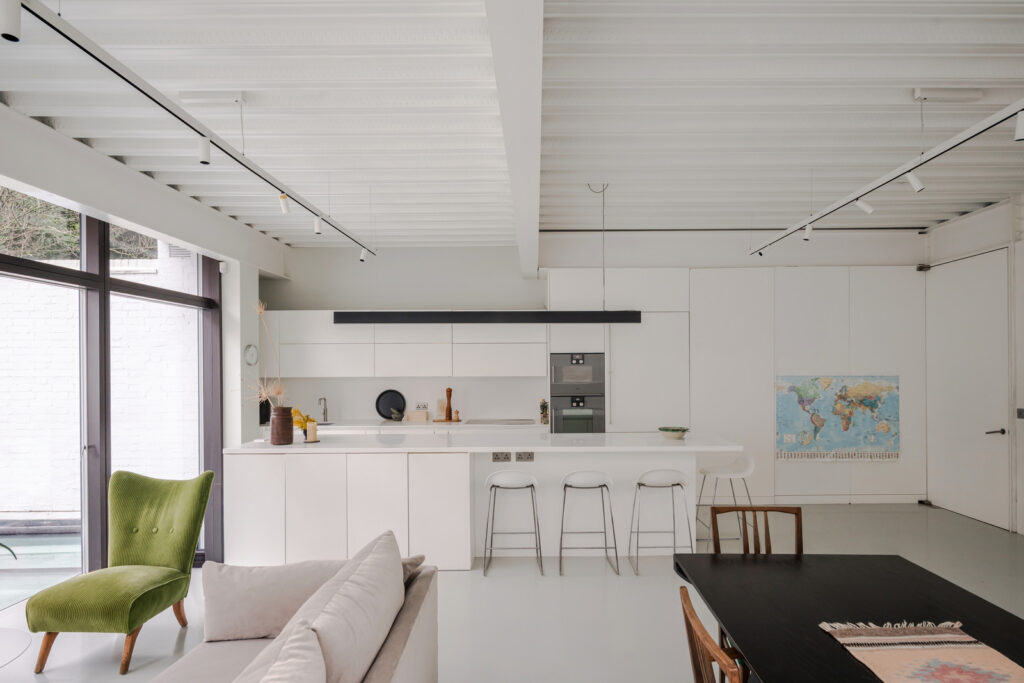
This bright, open-plan kitchen takes a minimalist approach to both design and kitchen lighting, using clean lines and a restrained palette to create a calm, architectural space. The all-white cabinetry and island reflect the natural light beautifully, while the exposed ceiling beams add subtle texture and rhythm overhead.
Instead of using pendant lights, this kitchen relies on a combination of track lighting with adjustable spotlights and a slim linear light suspended above the island. This approach creates a very clean and uncluttered look, allowing the architecture of the space to remain the focal point.
The track lighting provides flexible kitchen lighting, with directional spotlights that can be adjusted to highlight different areas of the kitchen — from work surfaces to cabinetry. This makes it a highly practical choice, particularly in modern kitchens where adaptability is important.
Above the extended island, the linear light offers a more structured form of kitchen island lighting. Its long, horizontal shape mirrors the proportions of the island, creating a strong visual connection between the lighting and the workspace below.
Overall, this kitchen shows how linear lighting can be a sleek and highly functional alternative to traditional kitchen pendant lights, offering both visual simplicity and practical, even light across the island.
My Favourite Kitchen Lighting Ideas
If you’re choosing kitchen lighting for your own home, these are some of my favourite timeless styles:
Classic white Scandinavian pendant lights, for a light feel such as the Gubi Bestlight pendants
A rail pendant light for a dining table or kitchen island such as the Muuto Ambit Rail Pendant light
Timeless pendant lights like the Louis Poulsen pendants suitable for anywhere in the kitchen
A stylish linear pendant light for modern kitchens such as the Muuto linear pendant light for an island or dining table
Simple, classic wall lights or lamps for added ambient light such as the Anglepoise wall lights
Soft opal glass pendant lighting for soft ambient light such as the New Works, Karl-Johan pendant lights
Kitchen lighting FAQ’s
If you are planning your kitchen lighting, here are some common questions to consider.
1. What is the best lighting for a kitchen?
The best kitchen lighting combines ambient, task and accent lighting to create a space that is both practical and inviting.
2. How many pendant lights should you hang over a kitchen island?
Most kitchen islands suit two or three pendant lights, depending on the size of the island and the scale of the fixtures.
3. What colour light is best for a kitchen?
Warm white lighting (around 2700K–3000K) is usually best for kitchens, as it creates a soft and welcoming atmosphere while still providing enough light for everyday tasks.
4. Are pendant lights still in style for kitchens?
Yes, pendant lights remain one of the most popular choices for kitchen island lighting, particularly in Scandinavian and modern kitchens where simple, timeless designs are preferred.
Final thoughts
Kitchen lighting is one of the most powerful ways to shape how a space feels and functions. Whether you choose pendant lights over a kitchen island, linear lighting for a more modern look, or simple spotlights paired with natural light, the key is to create a balance between practicality and atmosphere.
By layering different types of kitchen lights and considering how the space is used throughout the day, you can create a kitchen that feels warm, functional and effortlessly inviting. Thoughtful kitchen lighting is not just about visibility, but about creating a space that feels calm, considered and enjoyable to spend time in.
About Me